
Namibia Celebrates Linguistic Diversity on International Mother Language Day
- 1 day ago
- 2 min read

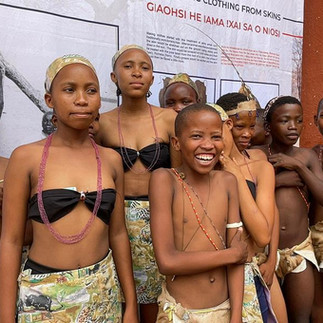





As Namibia joined the global community in commemorating International Mother Language Day on 21 February, the Ministry of Education, Innovation, Youth, Sport, Arts and Culture (MEIYSAC) reaffirmed its commitment to safeguarding the country’s rich linguistic heritage.
This year’s commemoration, held under the theme “Youth Voices on Multilingual Education,” placed special focus on Khoekhoegowab and the preservation of rare and endangered languages. The two-day event, organised by the Directorate of National Heritage and Culture in the Oshikoto Region, began at Tsintsabis Combined School in the Guinas Constituency and concluded with broader community engagement at the Guinas Councillor’s Office.
Learners from across the region showcased vibrant traditional dances and Khoekhoegowab chants, celebrating language as a living expression of identity and culture. The event also brought together members of the San community, including the !Khûn, Hai//om and Ju’hoansi, highlighting Namibia’s diverse linguistic landscape of over 20 spoken languages.
In a message delivered on behalf of Vice President Lucia Witbooi, it was emphasised that language is identity, heritage and the foundation of culture. The Ministry reiterated that no language is superior to another, and that Namibia’s multilingualism remains a national asset that must be nurtured and protected.
Khoekhoegowab teachers were recognised for their dedication to mother tongue education, including innovative approaches that have drawn both national and international attention. Their work underscores the critical role educators play in keeping indigenous languages vibrant and relevant.
International Mother Language Day, proclaimed by UNESCO in 1999 and first observed in 2000, promotes linguistic and cultural diversity worldwide. In line with this global call, the Ministry has established a national task force to conduct surveys and monitor language use across the country, ensuring that every mother tongue is preserved for future generations.
Through continued collaboration with communities, educators and development partners, Namibia remains steadfast in its commitment to protecting its linguistic heritage , because when a language thrives, so too does the identity and history of its people.
Story contributed: meiysac

Comments