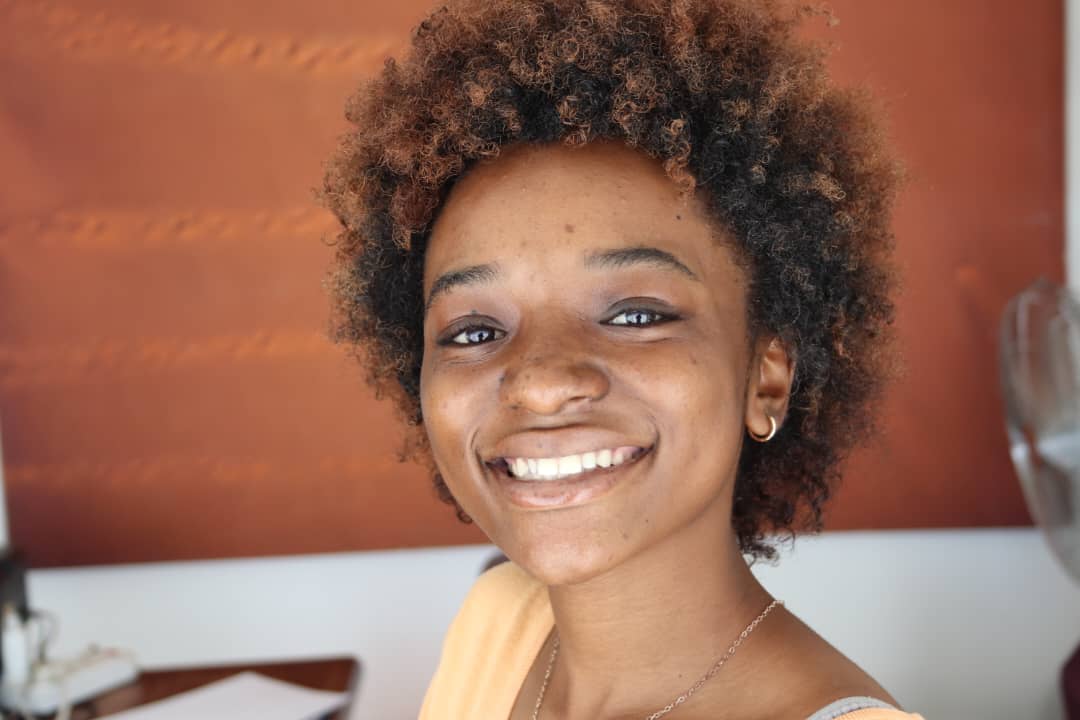

-By Eva-Rakel Johannes
Every year, independence arrives in Namibia with a ceremony, flags lifted into the March sky, and a collective pause to remember how far we have come. But when the music fades and the day settles into ordinary life, a quieter question lingers for many young Namibians (or so I’d like to think): what does it actually mean to be free now?
In 1990, independence was unmistakable.
It was visible in the lowering of one flag and the raising of another, in the return of exiles, in the first elections held under a new constitution. It was, in every sense, a moment of arrival. The struggle, carried by the brave men and women of the liberation struggle, marked by tragedies such as Cassinga, and sustained by generations who refused to accept subjugation, had culminated in something tangible: a sovereign nation.
But independence, as Aristotle might suggest, is not a static achievement. It is a condition that must be examined, lived, and, at times, questioned. “The unexamined life is not worth living,” he wrote. One might extend this to nations: the unexamined freedom risks becoming symbolic rather than substantive.
For the younger generation, independence is both real and incomplete. We move freely, speak openly, and participate in democratic processes - privileges that were once denied. Yet these freedoms exist alongside a more complicated reality. Namibia remains one of the most unequal societies in the world, with a persistently high Gini coefficient and youth unemployment rate that continues to shape the life chances of many.
This is where the meaning of independence begins to shift. It is no longer solely about political liberation; it is about economic participation, access, and dignity. It is about whether the ability to vote is matched by the ability to build a life. For many young Namibians, the gap between these two forms of freedom is where frustration quietly grows.
History offers perspective but also warning.
Across post-colonial Africa, the euphoria of independence often gave way to what scholars describe as a “second struggle” one not against foreign rule, but against inequality, exclusion, and the slow consolidation of power among ‘elites’. Namibia has, in many respects, maintained stability and avoided the extremes seen elsewhere. Yet stability alone cannot be the endpoint of independence.
As Frantz Fanon cautioned, true liberation requires more than the transfer of political authority; it demands the transformation of social and economic structures. Without this, independence risks becoming ceremonial; honoured annually, but unevenly experienced.
And yet, there is something quietly powerful about the present moment. A generation has emerged that did not inherit fear as its primary condition. Young Namibians create, critique, and imagine with a confidence that would have been difficult under colonial rule. Independence, in this sense, has become less visible precisely because it has become embedded in the everyday.
Still, humour often reveals what politics obscures. For some, independence today feels a bit like owning a house with a bond still attached - you hold the title deed, yes, but the terms of ownership remain constrained. The country is ours, but the conditions under which many live in it are still being negotiated.
This is not a rejection of independence. It is, rather, an insistence that its meaning must evolve. To honour the past is not to freeze it in time, but to build upon it with honesty. The generation of 1990 secured Namibia’s voice. The responsibility of today’s generation is to decide what that voice will confront and whether it will speak only in celebration, or also in challenge.
Because independence, ultimately, is not just something we commemorate. It is something we must continuously make real.
Eva-Rakel Johannes is a NQF8 Journalism and Media Technology student at the Namibia University of Science and Technology.